

E-commerce Website Development Guide (2026): How to Build a Profitable Online Store
Table of Contents
Well-planned e-commerce website development tips 2026 helps businesses create scalable, user-friendly, and conversion-focused online stores. In today’s competitive digital market, simply launching an online store is not enough. Without a structured development roadmap, businesses often face low engagement, poor conversion rates, slow performance, and weak customer trust.
This complete step-by-step guide explains how to research, plan, design, and develop a high-performing e-commerce website that improves user experience, increases conversions, and supports long-term growth.
Step 1: Customer Research — The Foundation of E-commerce Success
Customer research is the most critical phase of any e-commerce website development process. It helps you understand what customers want, why they buy, and what prevents them from completing purchases.
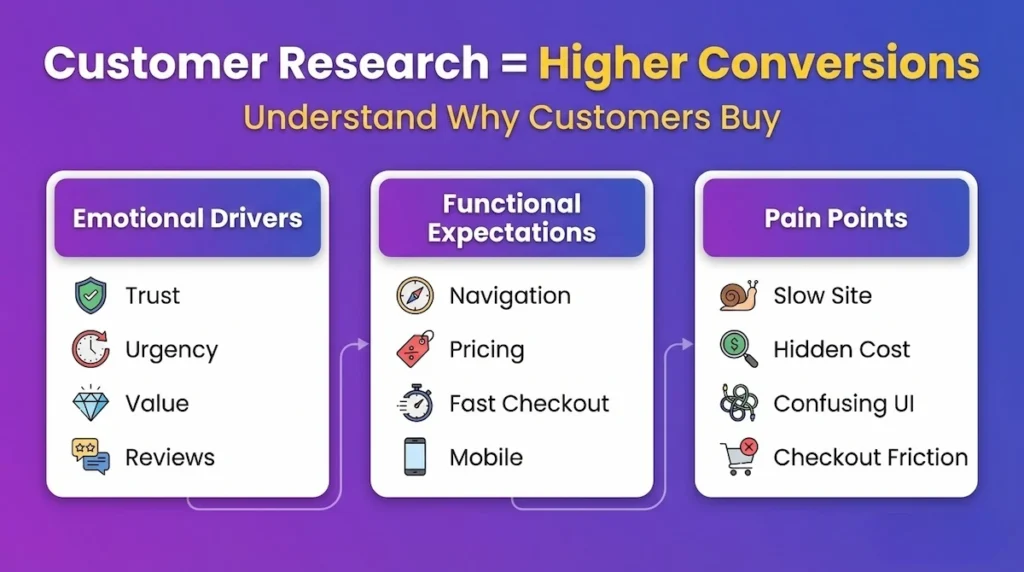
Understand Customer Buying Psychology
Emotional Drivers
- Perceived product value and uniqueness
- Urgency (limited stock / limited offer)
- Brand credibility and trust
- Social proof and reviews
Functional Expectations
- Transparent pricing and delivery details
- Simple navigation and search
- Fast and secure checkout
- Mobile-friendly browsing
Common Customer Pain Points
- Confusing website layout
- Hidden shipping charges
- Slow website speed
- Complicated checkout process
- Weak trust signals
- Unclear return and refund policies
Use competitor research, surveys, analytics, and customer reviews to identify behavior patterns. Many users abandon carts due to unclear costs, slow checkout, or lack of trust — fixing these issues significantly improves conversions.
Book a Free Website Development Consultation
Step 2: Website Structure Planning for Smooth User Journey
A clear website structure improves SEO, user experience, and conversions. strategic online store structure ensures users can move smoothly from product discovery to purchase.
Essential Pages for a High-Converting E-commerce Website
Homepage
- Clear value proposition
- Featured products and offers
- Trust badges and credibility signals
Category Pages
- Logical product grouping
- Easy filtering and sorting
- SEO-optimized structure
Product Pages
- High-quality images
- Benefits-focused descriptions
- Reviews and ratings
- Trust and security signals
Cart & Checkout
- Minimal steps
- Transparent pricing
- Guest checkout option
About & Contact Pages
- Brand story and credibility
- Customer support access
FAQ & Policy Pages
- Shipping details
- Return and refund policy
- Payment and security
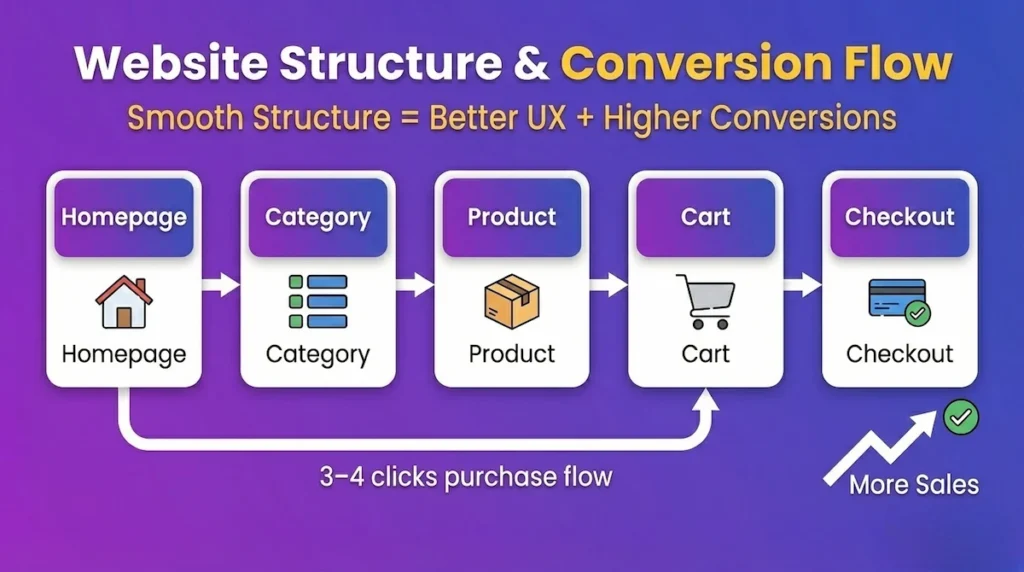
Ideal Conversion Flow
- 3–4 clicks from product page to purchase
- 5–6 clicks from homepage to purchase
Reducing friction improves purchase completion rate.
Step 3: Conversion-Focused Content Strategy
Content directly influences buying decisions. Web development roadmap includes persuasive, clear, and trust-building content.
Must-Have Content Elements
- Benefit-driven product descriptions
- SEO-optimized category and landing pages
- Trust content (guarantees, warranties, secure payment)
- Clear CTAs (Buy Now, Add to Cart, Limited Offer)
- Problem → Solution messaging
Good content builds trust, reduces hesitation, and increases engagement and conversions.
Step 4: UI/UX Design That Builds Trust and Improves Engagement
Design is not about decoration — it is about clarity, usability, and credibility. A clean and consistent design increases user confidence and improves performance.
Core Design Principles
- Consistent brand colors and typography
- Clean and minimal layout
- Strong visual hierarchy
- Clear CTA placement
- High-quality product images
- Proper whitespace for readability
Avoid over-designing. Simple, fast, and user-friendly websites convert better.
Step 5: Trust-Building Promotional Elements
Strategic promotional elements reduce hesitation and improve buying decisions.
Include in Promotional Sections
- Limited-time discounts
- Free shipping / easy returns
- Secure payment badges
- Customer testimonials
- Certifications and guarantees
These signals increase trust and reduce purchase anxiety.
Step 6: Mobile Responsive Development
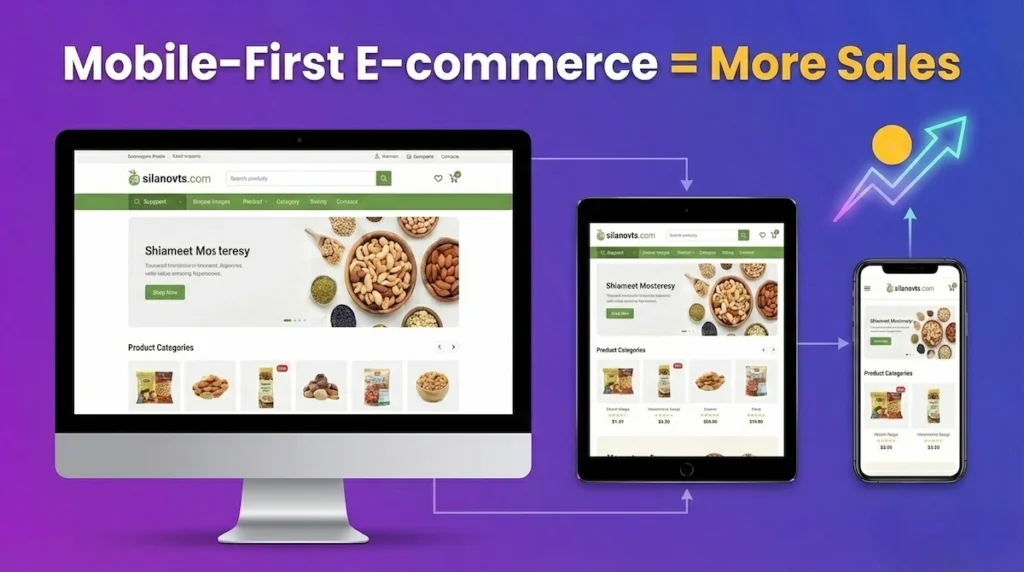
More than 80% of users shop on mobile devices. Modern online store Development must prioritize responsive, fast, and secure design.
Key Technical Priorities
- Mobile-first design
- Fast loading speed
- Smooth navigation
- Secure checkout
- Cross-browser compatibility
- Scalable architecture
Responsive websites improve engagement, SEO ranking, and conversions.
Step 7: Performance Optimization & Technical SEO
Technical performance directly impacts ranking and user experience.
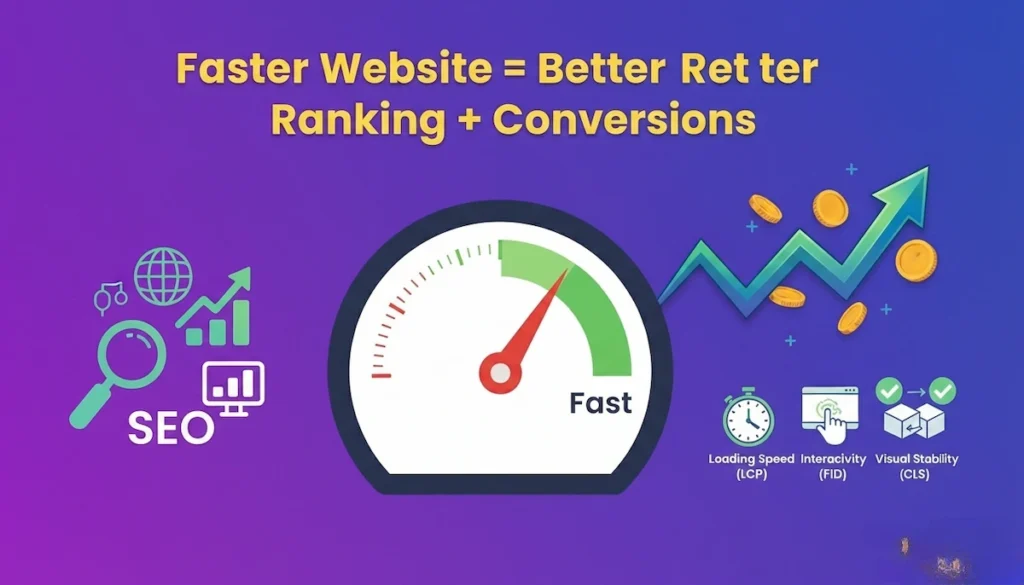
Optimize for
- Fast page speed (Core Web Vitals)
- Image compression and lazy loading
- SEO-friendly URLs
- Schema markup (Product, FAQ, Article)
- Secure HTTPS connection
- Crawlable site architecture
Technical optimization improves ranking, engagement, and scalability.
Step 8: Conversion Rate Optimization (CRO)
Traffic alone does not generate revenue — conversions do.
Improve Conversions With
- Clear CTA buttons
- Trust signals and guarantees
- Fast checkout flow
- Product reviews and social proof
- Urgency and scarcity triggers
- Exit-intent offers
Continuous testing improves performance.
Quick Summary: E-commerce Website Development Roadmap
- Customer research and behavior analysis
- SEO-friendly website structure
- Conversion-focused content
- Trust-building UI/UX design
- Strategic promotional elements
- Mobile-first responsive development
- Technical SEO and performance optimization
- Continuous conversion optimization
Final Thoughts
Well-structured ecommerce web development roadmap guide creates the foundation for a scalable, high-performing, and conversion-focused online store. It improves user experience, builds customer trust, increases sales, and supports long-term business growth.
FAQ
What is an e-commerce website development guide?
It is a structured roadmap to plan, design, and build a scalable, high-converting online store that improves user experience and business growth.
Why is a roadmap important for e-commerce websites?
It aligns your website with customer needs, improves conversions, avoids development mistakes, and ensures scalability.
How long does e-commerce website development take?
Usually 4–12 weeks depending on customization, integrations, and features.
What makes an e-commerce website successful?
Fast speed, mobile optimization, trust signals, smooth checkout, clear navigation, and conversion-focused content.
For expert guidance and strategic website planning, connect with IQRA Digital Solutions to build a powerful, conversion-driven e-commerce platform.