

On-Page and Off-Page SEO: Which Strategy Drives More Leads in 2026?
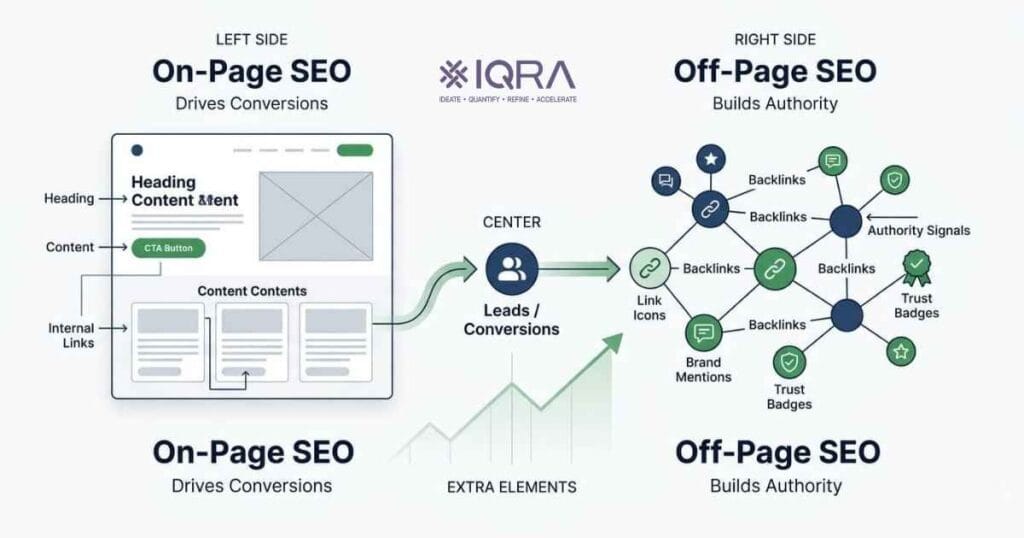
Table of Contents
On-page and off-page SEO are the foundation of every successful digital marketing strategy in 2026. Most businesses struggle with lead generation not because SEO doesn’t work — but because they don’t understand how these two work together.
If you are investing in digital marketing services but not getting enquiries, your on-page and off-page SEO strategy is likely misaligned.
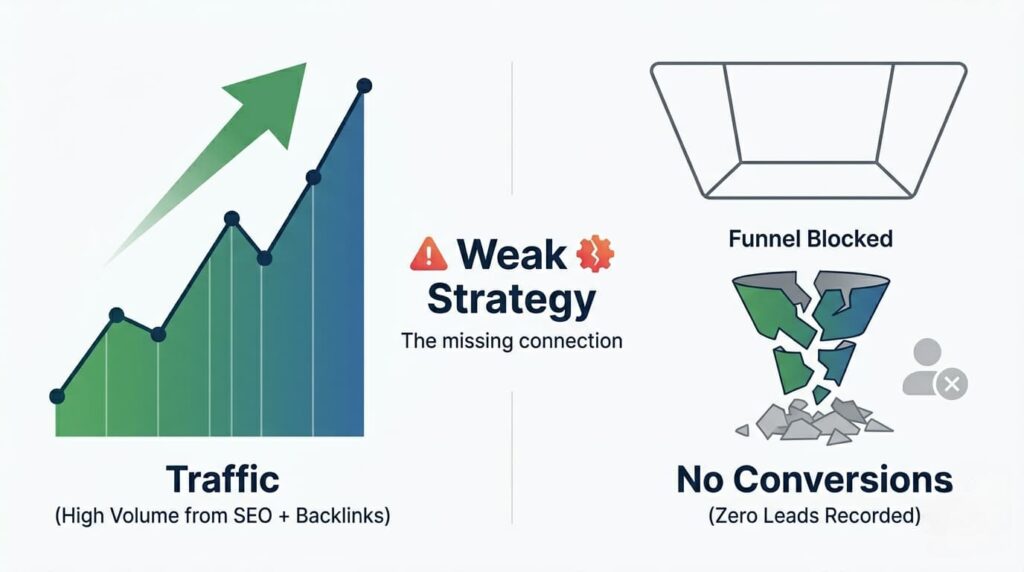
If your website is getting traffic but no enquiries, the problem is not SEO — it’s how your on-page and off-page SEO are working together.
In 2026, rankings alone don’t generate leads. Conversion-focused SEO does.
This guide cuts through the noise and shows you clearly what each discipline does, where the real lead generation leverage is, and how to prioritise your investment between the two in the current search landscape. To understand the foundation, you can also read our complete guide on what is SEO in 2026.
What Is On-Page SEO in 2026? (And Why It Matters for Leads)
On-page SEO is anything you can change on your own website. It is the base that makes your material useful, trustworthy, and easy to find for both search engines and individuals that visit your pages. This is why on-page and off-page SEO must work together, but on-page SEO is what directly impacts conversions.
A good on-page SEO checklist in 2026 covers more than it did only two years ago. Google’s systems for useful content now look at indications that go beyond where keywords are placed. This is what the checklist really needs to have.
- Tags for titles and meta descriptions: Your title tag is still one of the best on-page indications. It should be clear what the page is about, have your main keyword in the front, and be written for a person, not a search engine. Meta descriptions don’t directly affect rankings, but they do affect click-through rates, which do.
- Structure of the heading: A clear H1 that fits what people are looking for, along with logical H2 and H3 subheadings, makes it easy for both crawlers and readers to find their way around your material. The layout of your headings will also affect whether or not your content is included in Google’s AI Overviews in 2026.
- E-E-A-T: The quality of material is judged by Google’s quality raters based on its Experience, Expertise, Authoritativeness, and Trustworthiness (E-E-A-T). Pages that show real expertise through particular instances, new ideas, and correct data always do better than pages with weak, generic material.
- Core Web Vitals and the experience of the page: Page speed, visual stability, and mobile responsiveness are all verified variables that affect rankings. A page with great content but a slow load time will always do worse than a competitor with a faster load time.
- Internal linking: Well-placed internal links spread page authority throughout your site, assist crawlers find content, and lead visitors to places where they can convert. Most websites don’t spend enough money here, which means they miss out on a lot of prospective leads.
Some common on-page SEO mistakes to look out for on your website are duplicate title tags, missing or packed meta descriptions, broken internal links, pictures that aren’t optimised and don’t have alt text, pages that load slowly and don’t pass Core Web Vitals, and pages that don’t target the right search intent for their topic. A tool like Screaming Frog can rapidly find most of these by running a crawl.
What Is Off-Page SEO in 2026? (Building Authority That Converts)
On-page SEO is about relevancy, whereas off-page SEO is about authority. This is the information that comes from outside your website and tells search engines how trustworthy and reliable your brand is in your field.
Off-page SEO builds trust before users even visit your website, making it a critical part of any on-page and off-page SEO strategy.
Backlinks are still the most important off-page indicator, but the way to develop links in 2026 is different from how it was done in the early days of SEO. Volume alone doesn’t do anything anymore. What matters now is how relevant and authoritative the domains that link to you are, the editorial context in which your link appears, and how your backlink profile changes over time.
Off-page SEO tactics have become more complicated, especially for organisations in India. Local citations on Indian directories, localised PR coverage, and connections from industry-specific publications are very important for geo-targeted results. A D2C brand that wants nationwide traffic needs a different backlink profile than a business in Pune that wants clients all throughout Maharashtra.
In 2026, off-page SEO includes more than just backlinks. It also includes brand mentions (even without links), Google Business Profile signals for local search, social signals that speed up indexing, and PR coverage that creates E-E-A-T at the domain level. These signals work together to create the kind of trust that lets your on-page content reach its full potential.
On-Page and Off-Page SEO: Key Differences
| Factor | On-Page SEO | Off-Page SEO |
|---|---|---|
| Control | Full control | Limited control |
| Purpose | Conversion | Trust & authority |
| Speed | Fast results | Takes time |
| Lead Impact | Direct | Indirect |
How On-Page and Off-Page SEO Fit Into Digital Marketing Services
In modern digital marketing, SEO is not a standalone activity. It works alongside:
- Paid ads (Google Ads, Meta Ads)
- Social media marketing
- Content marketing
Without on-page SEO, traffic from ads or social media will not convert.
Without off-page SEO, your website will struggle to rank and attract quality traffic.
This is why businesses investing in digital marketing services need both working together.
How Search Intent Impacts On-Page and Off-Page SEO
In 2026, SEO is driven by search intent, not just keywords.
- Informational searches → blog content (on-page focused)
- Commercial searches → service pages (balanced SEO)
- Transactional searches → landing pages (conversion-focused)
Off-page SEO helps these pages rank, but on-page SEO ensures they convert into leads.
Which One Gets More Leads?
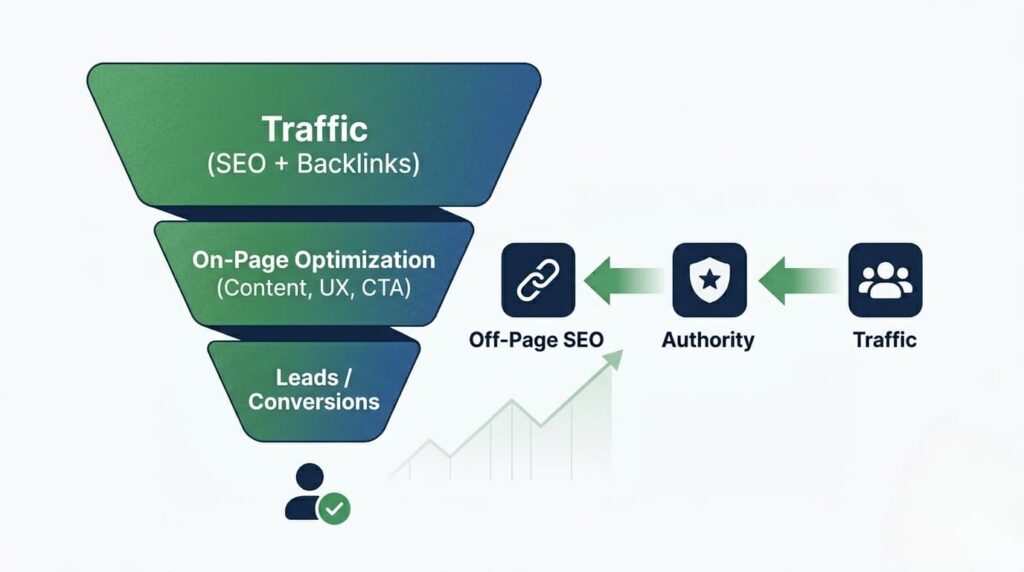
This is the question that every business owner and marketing manager will eventually ask. The honest answer is that it depends on where you are on your SEO maturity curve. However, for most businesses that are just starting out or fixing a weak foundation, on-page SEO is the best way to get leads quickly and easily.
This is how it works. On-page SEO takes advantage of demand that is already there. A well-optimized page with clear CTAs and a strong alignment with search intent can turn visitors into leads when they look for what you provide. On the other hand, off-page SEO establishes the authority that lets more of your pages rank for more competitive queries over a longer period of time.
BrightEdge study suggests that B2B companies generate 2X more revenue from on-page and off-page SEO than any other channel. The actual SEO lead-generating plan is in the way that both of these things work together to make each other better. According to BrightEdge, organic search continues to drive the majority of trackable website revenue.
When a lot of websites have identical on-page quality, off-page SEO tactics tend to be the most important for Indian firms who want to compete in B2B or service industries. When two pieces of content are about the same quality, Google uses backlinks to break the tie.
How to Build a Link Strategy That Really Gets You Leads in 2026?
In 2026, the link development strategy has shifted away from outreach volume and toward authority based on content. The best methods all have one thing in common: they get links because they offer something that people really want to connect to.
At present, the best link assets are original research and data reports. Journalists, bloggers, and rivals will link to your well-organised study on a specific topic in your field because they want to quote a reliable source. Localised data on industry trends or market activity in a specific area is quite hard to find for Indian enterprises, making it very linkable.
Guest posts on well-known industry websites help both backlinks and E-E-A-T at the same time. It’s important to choose newspapers that your target audience already reads, not only those with high domain authority scores. Every time, a link from a mid-authority site in your specific topic will be better than a link from a high-authority site that isn’t in your area.
In 2026, digital PR, where you pitch noteworthy stories to journalists and get coverage in the news, became one of the best ways to get links from other sites. A single strong piece of coverage in a well-known newspaper can lead to dozens of follow-up links and a big increase in branded search volume.
Our off-page SEO services are designed to help organisations in India and around the world establish a link strategy that directly affects lead flow.
You can explore our off-page SEO services to build high-quality backlinks that drive real business results.
The SEO Lead Generation Strategy That Will Work in 2026 and Beyond
In 2026, the best way to get leads through SEO is not to choose between on-page and off-page SEO. It is a progressive integration of both, in the right order.
Begin with a full audit of the page. Fix the technical problems, make sure your content matches what people are looking for, improve your internal linking, and make sure that every important landing page has a clear path to conversion. This is the base that makes investing off-page worth it. Sending authority signals to a page that isn’t well optimised is like filling a bucket that has a hole in it.
Once your on-page foundation is strong, make your off-page strategy based on the pages that sell your most valuable services or products. These are the pages that bring in leads when they rank. Every link-building attempt and PR push should help them build their authority.
In 2026, AI search visibility will be more important than ever. Both on-page and off-page indications are important. Google’s AI Overviews and tools like Perplexity use indexed, reliable content. AI-generated responses show pages that are well-organised, answer issues directly, and have a lot of domain authority.
The Bottom Line
There is never truly a debate of on-page versus off-page SEO. Both have a role in how organic search brings in leads for your organization. On-page SEO makes sure that the correct people find the right pages and do what you want them to do. Off-page SEO makes sure that those pages have the authority to compete.
In 2026, the firms that win through search will be the ones that know that on-page and off-page SEO are two parts of the same engine, not two different efforts. If you do each of these things correctly and in the appropriate order, organic search can be one of the most cost-effective ways to get leads.
Want to see exactly where your existing SEO is losing leads? IQRA Digital solutions will give you a free SEO audit that will show you exactly what you need to do to fix your on-page and off-page problems.
This article was written by the performance growth team at IQRA Digital Solutions, specialists in performance marketing and structured B2B lead generation.
FAQs:
What is the difference between on-page and off-page SEO?
On-page and off-page SEO differ in control and purpose. On-page SEO focuses on optimizing your website content and structure, while off-page SEO builds authority through backlinks and external signals. Both are essential for generating leads.
What is more important for getting leads in 2026?
On-page SEO usually brings in leads faster and more directly since it takes advantage of existing search demand and turns it into leads through well-optimized sites. Over time, off-page SEO builds on itself and becomes the most important aspect in marketplaces with a lot of competition.
Most firms should focus on on-page work initially, then have a consistent off-page plan.
What are the most typical mistakes people make with On-page SEO that harm lead generation?
Pages that target the wrong search intent, duplicate or missing title tags, sluggish load times that fail Core Web Vitals, weak internal linking that keeps important pages from being seen, and content that doesn’t meet Google’s E-E-A-T criteria for depth and specificity are some of the worst mistakes.
A program like Screaming Frog can do a crawl audit to find most of these.
In 2026, what off-page SEO methods work best in India?
Editorial backlinks come from original research and localised data reports the most. Guest posts in well-known Indian business magazines help you gain credibility and trust from your audience.
Digital PR aimed at business and trade media gets a lot of good press. Local citations in Indian directories that are relevant to your business help with geo-targeted results. And clever broken link construction, in which you replace dead links with your own content, always works.
How long does it take for on-page and off-page SEO to start bringing in leads?
Changes made to pages that are already indexed can show results in 4 to 8 weeks. It usually takes 3 to 6 months for off-page SEO, especially link building, to have a clear effect on ranks and traffic.
When both are done consistently, they tend to create a compounding lead flow that speeds up a lot after the six-month point.
Still not sure where your SEO is failing?
Get a free SEO audit and discover:
✔ Which pages are not converting
✔ Where your traffic is leaking
✔ How to improve your on-page and off-page SEO
👉 Start your SEO growth with IQRA Digital Solutions { Linkdin }