

12 Benefits of Shopify: Why It Is the Best Ecommerce Platform for Online Stores (2027)

Choosing the right ecommerce platform can make a big difference to how you launch and grow your online store. The benefits of Shopify include easy store management, built-in hosting, flexible integrations, and tools for selling across multiple channels. However, the right platform depends on your budget, product range, customization needs, and long-term business goals. In this guide, we’ll explore 10 key benefits of Shopify and explain what businesses should consider before choosing it.
What is Shopify, and why are entrepreneurs using it?
Shopify is a unified, all-in-one online platform for every ecommerce business. Entrepreneurs prefer Shopify for online stores because it is easier to start, run, manage, and scale. Businesses in many countries use Shopify to run their online stores.
One of the standout advantages of Shopify is that it does not require prior coding skills, making it a platform that helps businesses build and manage ecommerce stores without extensive coding. With the intuitive drag-and-drop editor interface, anyone can build a Shopify website.
Key Advantages of a Shopify Website
Shopify is not only easy to use. Shopify offers a range of ecommerce features, although the available functionality varies across platforms.
- Easy Website & Business Scalability: Ecommerce entrepreneurs use Shopify architecture to grow their ecommerce business. They can start small, and as their business grows, scale their online stores through Shopify’s flexible plans, apps, and plugins.
- Multichannel selling opportunities: Shopify POS enables owners to sync inventory across all sales platforms and channels. Business owners can combine in-store sales with online sales to enjoy the best benefits of both worlds.
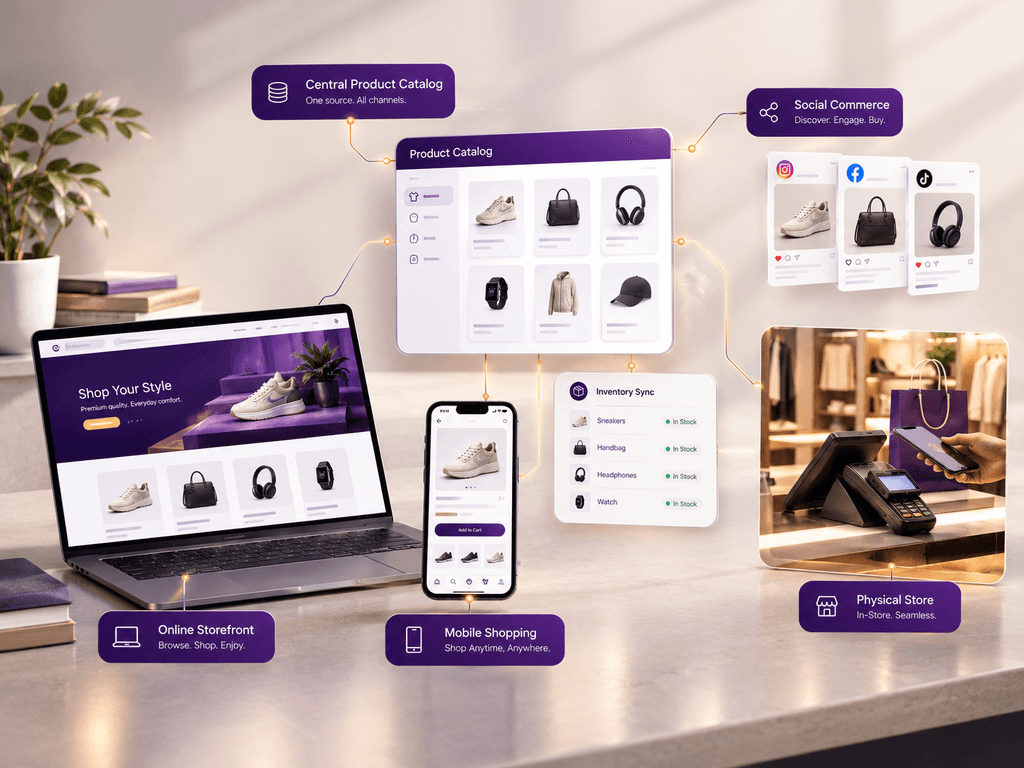
- A wide range of ready-to-use apps and plugins: Shopify offers a vast number of Shopify apps entrepreneurs can leverage based on their business requirements and goals. Shopify’s App Store offers third-party apps for marketing, customer service, inventory management, and other business needs.
- Enterprise-grade checkouts: Shopify offers a secure checkout experience designed to make purchasing easier. Entrepreneurs can use Shopify Shop Pay for efficient checkouts and high conversion at the final stage of the customer lifecycle.
Key Benefits of Using Shopify Websites
Shopify website development offers several benefits that may distinguish it from alternative ecommerce platforms.
- Supports a variety of business websites: Developers can customize the Shopify ecommerce website based on the design, architecture, needs, and goals. Shopify can build websites for physical, digital, or drop-shipped products and services.
- Ease of launching Shopify ecommerce platforms: Merchants love Shopify because they do not have to depend on developers or programmers. The visual store editor makes it easier to add products and customize supported store elements. To add products, create offers and discounts, integrate a payment gateway, and process orders.
- Low-cost business websites for startups: Many startups operate with limited budgets. Shopify makes an ideal platform for them with an affordable monthly cost. Check Shopify’s current trial offer before publishing pricing information. The basic plan is $29, and the advanced plan is $79 monthly. The highest plan is $299 per month. All plans include hosting + SSL.
Let’s explore more Shopify features and how they can benefit online stores
12 Key Benefits of Shopify for Ecommerce Businesses
Shopify has a wide range of features and benefits. Let us discuss all of them one by one: what they mean and how they can help an ecommerce business owner.
- Scalable Server Architecture
One of the biggest advantages of Shopify is its cloud-based server architecture. It helps businesses scale their stores as demand grows. During a major sale, an online store may receive far more visitors than usual. Shopify manages its hosting infrastructure, but store performance can still depend on the theme, apps, and storefront setup. Shopify’s architecture scales dynamically when businesses launch flash sales during festive seasons. Store owners can avoid server crashes and downtime. Shopify manages much of the underlying hosting infrastructure.
Even a small store may experience sudden traffic increases during promotions. But successful campaigns, festive sales, promoting via influencers, or viral products can suddenly get thousands of visitors within minutes.
Traditional business websites may not handle increased traffic. Shopify empowers ecommerce website owners to handle increased traffic with its dynamic scalability feature.
- Website Pages Load Faster
Shopify’s Global Content Delivery Network (CDN) boosts page loading speed. Slow page speed affects ecommerce website performance. Slow loading can frustrate visitors and may affect conversion performance. Page load speed helps with faster checkouts. A faster, easier-to-use storefront can help customers complete their purchases. A slow website will have a high bounce rate and lower conversions. CDN delivery, caching, and image optimization complement Shopify’s architecture.
- Shopify for Specific Business Needs
Shopify doesn’t make every site fast automatically. Heavy themes, unpolished apps, and images can decrease the speed at which web pages load. Store owners can use performance tools to identify themes, apps, images, and scripts that may slow down a storefront. Shopify assists with high-speed page loading, but developers still need to optimize the storefront.
- A Wide Range of Apps and Plugins
The selection of apps and plugins is one of Shopify’s strong points. It supports integrations with a wide range of apps and services. You can integrate tens of thousands of third-party plugins and apps from its Shopify App Store. You can use these apps to manage inventory, email marketing, loyalty programs, and customer-facing chatbots. Without coding, brands can expand their stores. This makes it one of the most versatile Shopify advantages and features for users.
Shopify offers apps and plugins. They will help you add functionality without building every feature from scratch. Shopify also has APIs and customizations for more technical businesses.
This means you can begin with the basic structure and add more advanced functionality as the business grows.
- Easy-to-Manage Product Catalog Architecture
Shopify’s admin tools help merchants organize products, variants, inventory, and pricing through collections, tags, variants, and filters. Whether you have a five-product boutique or a 50,000-item catalog, Shopify’s intuitive dashboard allows teams to update pricing, stock, and descriptions in bulk with no technical skill required.
Managing a large product catalog can quickly become complex. Shopify helps manage products, variants, pricing, inventory, and all related information via a centralized product catalog in one administrative environment.
This is useful when a single catalog has to power more than one sales and marketing channel.
Shopify can handle massive enterprise-level catalogs. The Shopify ecommerce platform can host over 1 million products and variants.
- Simple Integration with Meta
One potential benefit is syncing product information with supported sales channels. The integration helps Meta discover live product data, pricing, images, and availability directly from the shop storefront. Depending on the setup, manual feed management may be needed; verify the connected channel’s requirements, which can result in paid campaign errors.
Ecommerce is not just about the website. Social commerce is critical since customers discover products via Instagram and Facebook. Shopify supports social and other sales-channel integrations, depending on the connected service and configuration.
When you update your Shopify catalog, the connected channel can use the same product information.
- Built-in Checkout Optimization
Features such as Shop Pay can simplify checkout for eligible customers. A smoother checkout means fewer abandoned carts.
- Easy Google Shopping Integration
Google and YouTube sales channels help businesses synchronize Shopify products, store information, and more. Businesses can link Google Ads and Google Analytics and get free product listings on relevant Google platforms. The integration can sync product information with Google Merchant Center, subject to eligibility and setup requirements.
- Designed for Mobiles
Smartphones account for a larger number of users who shop and browse online. Shopify themes are designed to support responsive storefront experiences. The mobile-first, friendly, and responsive interface ensures a seamless browsing experience across mobile screen sizes with no extra development effort.
- Businesses Selling on Multiple Platforms
Shopify can help merchants manage sales across supported channels from a connected commerce setup throughout your business.
It means a business can sell via its website, social marketplaces, and physical retail while keeping commerce operations connected.
With Shopify Markets, merchants can also display product availability, pricing, and transaction currencies on channels and markets.
- Strong Security and Compliance
By default, Shopify is PCI DSS compliant. It equips online businesses and stores to process customer payments securely using Shopify’s security and compliance infrastructure. It alleviates some compliance burden from businesses and helps build trust with customers, an often-overlooked but critical piece of building long-term brand loyalty and equity.
- Easier Marketing ROI Measurement
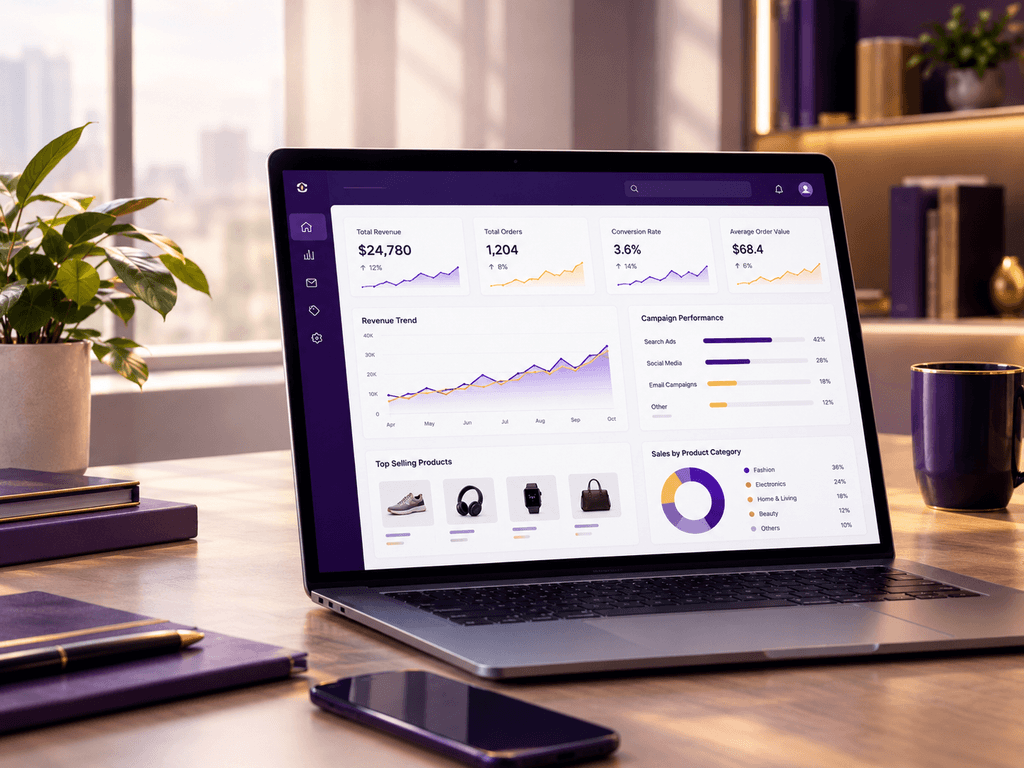
Integrated reporting can help merchants assess marketing performance: your analytics dashboard within Shopify can integrate with ad platforms and show brands which campaigns directly convert to revenue. By connecting Shopify with analytics and advertising tools, businesses can better understand which campaigns bring visitors and sales. Accurate ROI measurement still depends on correct tracking and attribution. This can be more difficult when data is spread across disconnected systems.
The ability of ecommerce data to talk with marketing systems is one of the underappreciated aspects of a Shopify website.
Through the links created between, say, Shopify and Google Ads, Google Analytics and Meta’s analytics and advertising tools, where supported, it is easier to connect campaigns, traffic, customer behavior, and sales. The Google integration by Shopify, for instance, supports connections to Google Ads and Google Analytics.
Marketers are in a better position to answer important questions:
- How much did we spend to acquire new customers?
- What was the revenue of the campaign?
- What products converted?
This means marketing decisions are more result-driven than assumption-based.
Why Bigger Brands Choose Shopify
Shopify may suit businesses at different revenue levels, depending on their operational needs. At this scale, reliability during high-traffic sales, multi-channel selling, and ERP or warehouse system integrations are critical.
Shopify Plus for larger setups
Shopify Plus is designed for businesses with more complex commerce requirements. Shopify website development is an investment for the long run rather than a quick fix for growing brands.
Shopify Plus is for large retailers and multi-channel businesses, often serving more complex merchants operating in several sales and marketing channels. According to Shopify, its enterprise platform powers B2C, B2B, and retail commerce from a single foundation.
Who Should Use Shopify for Business?
Shopify doesn’t automatically suit the requirements of all companies. It depends on the Shopify deployment model. Shopify architecture can support a highly simplified or customized website.
Shopify’s combination of features may suit businesses that prioritize scalability, product management, channel integrations, and reporting.
Frequently Asked Questions About Shopify
1. What are the main benefits of Shopify for an online store?
Shopify offers an easy-to-manage store builder, hosted infrastructure, product and inventory management, checkout tools, app integrations, and support for selling across multiple channels. These features can help businesses launch and manage an online store without maintaining their own web servers. The actual benefits depend on the business’s needs, plan, and integrations.
2. Is Shopify good for beginners with no coding experience?
Yes. Shopify is designed to let beginners create and manage an online store without advanced coding skills. Its themes and store editor help users customize the storefront, add products, and manage orders. More advanced designs or custom functionality may still require a developer or specialist app.
3. Is Shopify good for SEO and Google rankings?
Shopify includes SEO-friendly features such as editable page titles, meta descriptions, readable URLs, and structured store navigation. However, using Shopify does not guarantee higher Google rankings. Results also depend on content quality, technical implementation, site performance, internal links, and competition. Store owners should monitor indexing and organic performance regularly.
4. How much does it cost to build a Shopify website in India?
The total cost depends on the Shopify subscription, domain, theme, paid apps, payment processing, and development requirements. Shopify India lists different plans with different features and billing options, so check the current official pricing before budgeting. A custom-designed store can cost more than a basic DIY setup.
5. Can Shopify handle business growth and high website traffic?
Shopify manages the underlying hosting infrastructure, which reduces the need for merchants to maintain their own web servers. It can be a practical option for growing businesses, but actual performance also depends on the theme, apps, integrations, and storefront optimization. Businesses with complex requirements should evaluate the appropriate plan and architecture.
6. Is Shopify mobile-friendly for customers shopping on smartphones?
Shopify offers themes designed to support responsive storefronts across different screen sizes. However, the final mobile experience depends on theme quality, app scripts, image sizes, navigation, and checkout usability. Test important product and checkout pages on real mobile devices before launching the store.
7. Is Shopify secure for accepting online payments?
Shopify provides a hosted commerce platform with PCI DSS compliance for payment security. Merchants must still configure their stores properly, protect account access, and follow applicable payment and privacy requirements. Payment methods and processing fees vary depending on the merchant’s country and chosen payment provider.
8. Can I connect Shopify with Instagram, Facebook, and Google Shopping?
Shopify supports integrations with supported sales and marketing channels, including Google and social commerce platforms. Available features depend on channel eligibility, region, account setup, and the integration being used. Merchants should verify product-feed requirements and keep product information accurate across connected platforms.
9. What are the disadvantages of using Shopify?
Shopify has recurring subscription costs, and additional expenses may include paid apps, themes, payment processing, and custom development. Advanced customization may require technical help, while app dependencies can affect performance and maintenance. Businesses should calculate the total cost and compare Shopify’s features with their specific ecommerce requirements before choosing a platform.
10. Is Shopify better than WooCommerce for an online store?
Shopify may suit businesses that prefer managed hosting and an integrated commerce platform. WooCommerce may suit businesses that want more control over their WordPress-based store and hosting environment. Neither platform is universally better; the right choice depends on budget, technical resources, customization needs, maintenance responsibilities, and long-term business goals.
Conclusion
Shopify offers a practical way to build and manage an online store, with features for product management, checkout, integrations and multichannel selling. These benefits can make it a suitable option for startups, growing ecommerce brands and established retailers. However, your decision should also consider subscription costs, payment fees, paid apps, customization requirements and SEO needs. Before choosing Shopify, compare its features with your business goals and budget. If you need professional support, IQRA Digital Solutions can help you evaluate your ecommerce website requirements and Shopify development options.
Written by the performance marketing team at IQRA Digital Solutions, their years of experience with SEO strategy and and digital marketing for B2B lead generation. LinkedIn